
How to Clean Jewellery at Home: The Ultimate Guide to Sparkling Shine
Jewellery is one of the most personal items we own. It’s not just about beauty — it holds memories, carries emotional value, and expresses who we are. Whether it’s a wedding ring, a delicate necklace, or a pair of favorite everyday earrings, keeping your jewellery clean helps it stay beautiful and last longer.
While professional cleanings are great once in a while, most pieces can be safely cleaned at home with just a few tools and some basic knowledge. In this blog post, we’ll show you how to clean jewellery at home, what materials to avoid, and how to bring back the sparkle without damaging your favorite pieces.
Why Clean Your Jewellery Regularly?
We wear jewellery daily, but rarely think about what it goes through. From exposure to skin oils and lotions to makeup, sweat, dust, and pollution — all of these can make your jewellery look dull over time.
Benefits of regular cleaning:
- Restores shine and brilliance
- Prevents tarnish and buildup
- Keeps gemstones clear and bright
- Helps you spot any damage early (like loose stones or bent clasps)
- Reduces skin irritation caused by dirt or grime
How to Clean Jewellery at Home
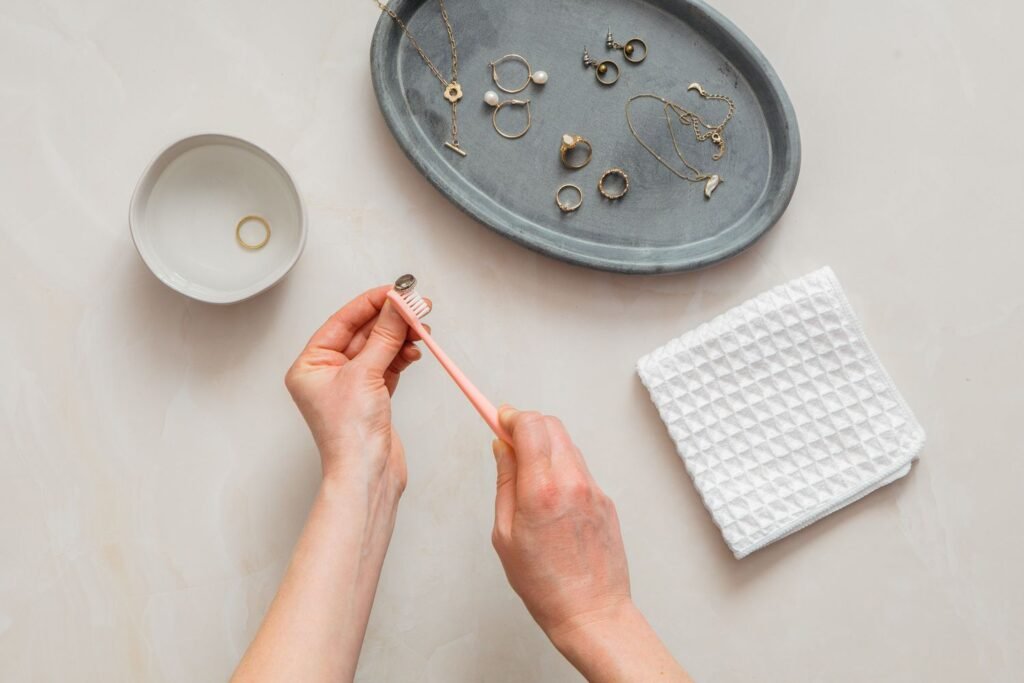
General Cleaning Tips Before You Start
Before diving into the cleaning methods, here are a few key tips to keep in mind:
- Know your jewellery: Different materials need different care. What works for gold might damage pearls or gemstones.
- Use soft tools: Always use a soft cloth or a very soft-bristled toothbrush to avoid scratches.
- Avoid harsh chemicals: Household cleaners, bleach, vinegar, and acetone can ruin finishes and damage delicate stones.
- Test first: When trying a new method, always test it on a small, hidden area.
What You’ll Need
Here’s a list of items you can gather to clean most types of jewellery at home:
- Mild dish soap (preferably fragrance-free)
- Warm water
- A soft-bristled toothbrush
- A bowl or cup
- Microfiber cloth or lint-free towel
- Baking soda (for silver)
- Soft polishing cloth (for delicate metals)
- Cotton swabs (for hard-to-reach areas)
How to Clean Gold Jewellery at Home
Gold doesn’t tarnish, but it can lose its shine due to buildup from skin oils, lotions, and dust.
Steps:
- Prepare a cleaning solution: Mix a few drops of mild dish soap with warm (not hot) water in a bowl.
- Soak the jewellery: Let your gold pieces soak for 15–20 minutes.
- Gently scrub: Use a soft toothbrush to clean crevices and around settings.
- Rinse: Under clean running water to remove soap residue.
- Dry and polish: Use a soft cloth to pat dry and buff gently.
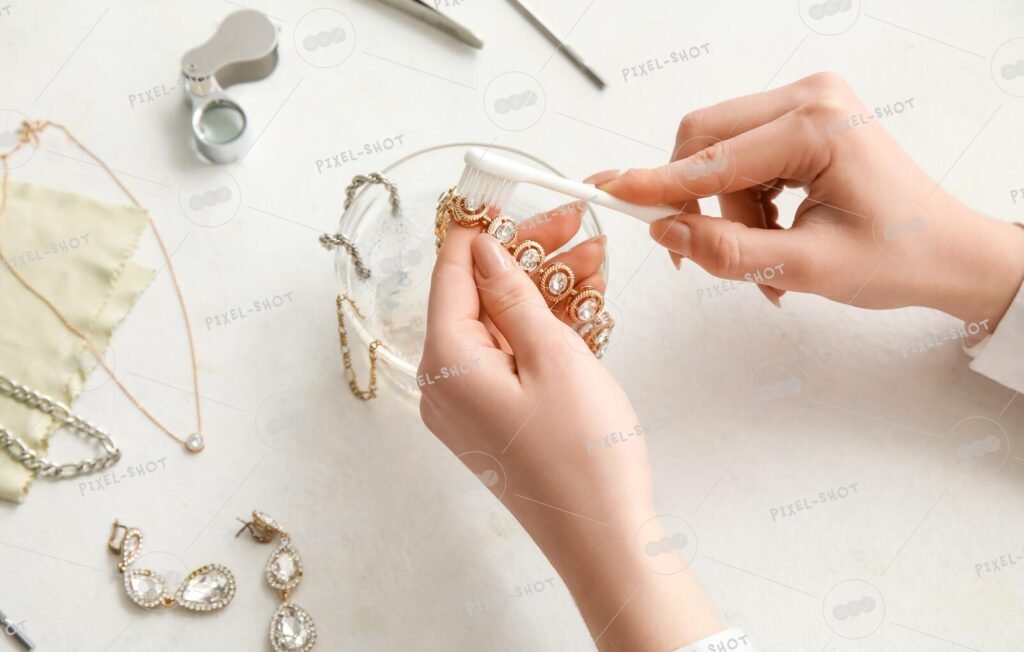
Bonus Tip: For extra shine, you can polish with a soft cloth made specifically for gold jewellery.
How to Clean Silver Jewellery at Home
Silver is prone to tarnishing over time, especially when exposed to air and moisture.
Method 1: Soap and Water
- Blend a couple of drops of gentle dish soap with warm water to make a safe and soothing solution for cleaning your jewellery.
- Soak silver items for 10 minutes.
- Use a soft toothbrush to clean, then rinse and dry.
Method 2: Baking Soda Paste (for Tarnished Silver)
- Make a paste using 2 parts baking soda to 1 part water.
- Rub gently with a soft cloth.
- Rinse thoroughly and dry completely.
Tip: Don’t use baking soda on silver-plated items, as it may strip the coating.
How to Clean Diamond Jewellery
Diamonds are tough but attract oil and dirt easily, especially around the setting.
Steps:
- Soak the diamond piece in a bowl of warm water and mild dish soap for 20–30 minutes.
- Gently brush your piece with a soft-bristled toothbrush, focusing on hard-to-reach areas behind the stone where buildup often hides.
- Gently rinse with warm water to wash away any remaining residue, then pat dry using a soft, lint-free cloth to restore its natural shine.
Avoid: Toothpaste or abrasive cleaners — these can scratch the metal or setting.
How to Clean Gemstone Jewellery
Gemstones vary widely in hardness and porosity. For instance, gemstones like sapphires and rubies are quite durable, whereas opals, pearls, and turquoise are softer and more porous, requiring extra care.
Safe Method for Most Hard Gemstones (Sapphire, Ruby, Topaz):
- Use warm water and mild soap.
- Soak for 10–15 minutes.
- Gently brush with a soft toothbrush.
- Rinse and dry with a soft cloth.
Avoid soaking softer stones like:
- Opals
- Pearls
- Turquoise
- Amber
- Lapis lazuli
“Rather than soaking, gently clean these with a soft damp cloth, then dry them right away to prevent damage.”
How to Clean Pearl Jewellery
Pearls are especially delicate. They can easily be damaged by chemicals, water, or rough scrubbing.
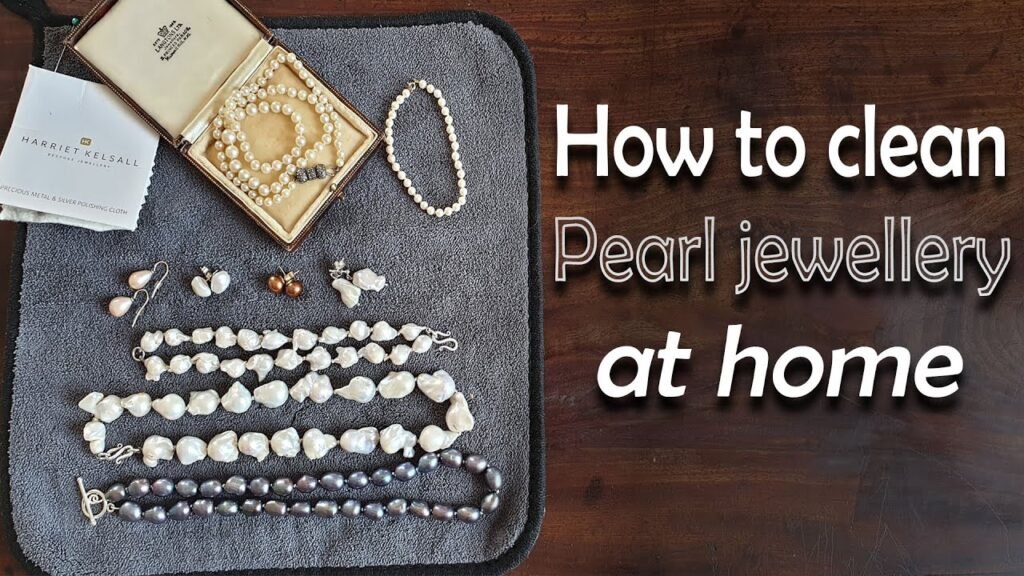
How to clean pearls safely:
- Wipe gently with a soft, slightly damp cloth after each wear.
- If they need deeper cleaning, use a cloth dampened with mild soapy water — but never soak pearls.
- Allow them to air dry flat (not hanging), especially if strung on silk.
Extra tip: Store pearls separately from other jewellery to avoid scratches.
How to Clean Costume Jewellery
Costume jewellery (fashion jewellery) is made with plated metals and glued-in stones, which can be damaged easily.
Cleaning steps:
- Dampen a soft cloth with water and a drop of mild soap.
- Gently wipe the surface.
- Use a dry cloth immediately to remove moisture.
- Never soak — the glue can loosen.
Jewellery Cleaning: What NOT to Do
Here are some common mistakes to avoid when cleaning jewellery:
Don’t use toothpaste – It’s too abrasive for most metals and stones.
Don’t soak soft gemstones or costume jewellery – Water can damage or loosen settings.
“Avoid using harsh substances like bleach, vinegar, or ammonia, as they can damage metals and cause stones to become dull or pitted.”
Don’t scrub aggressively – Always be gentle, especially around settings and prongs.
How Often Should You Clean Your Jewellery?
- Everyday pieces (like engagement rings): Once a week at home, with a professional cleaning every 6–12 months.
- Occasional pieces: Clean after each use or before storing away for long periods.
- Tarnished silver: As needed, depending on exposure to air or humidity.
Pro Tips to Keep Jewellery Clean Longer
Put jewellery on last: After applying lotion, perfume, or makeup
Remove before bathing, swimming, or cleaning
Store in a dry, air-tight place
Wipe down after wearing to remove sweat and oils
Use anti-tarnish strips in your jewellery box for silver items
When to See a Professional
Some situations require a professional jeweller:
- Heavily tarnished or damaged pieces
- Loose stones or broken clasps
- Vintage or heirloom items
- Deep cleaning for intricate designs
If in doubt, it’s always safer to have a jeweller assess and clean your valuable or sentimental pieces.
Conclusion
Cleaning your jewellery at home doesn’t need to be complicated. With just a few household items and the right technique, you can keep your rings, necklaces, and earrings looking as stunning as the day you bought them.
By building a simple cleaning routine and knowing how to treat each type of jewellery properly, you’ll extend the life of your collection and enjoy its beauty every day.